Posts

Another interview for NPR on the evolving hostage crisis in Japan

Image
With WNYC's Brooke Gladstone for "On the Media."

My interview on the Japanese hostage crisis for NPR

Image
Sadly. With Barbara Bogaev for KCRW's "Press Play with Madeleine Brand" :

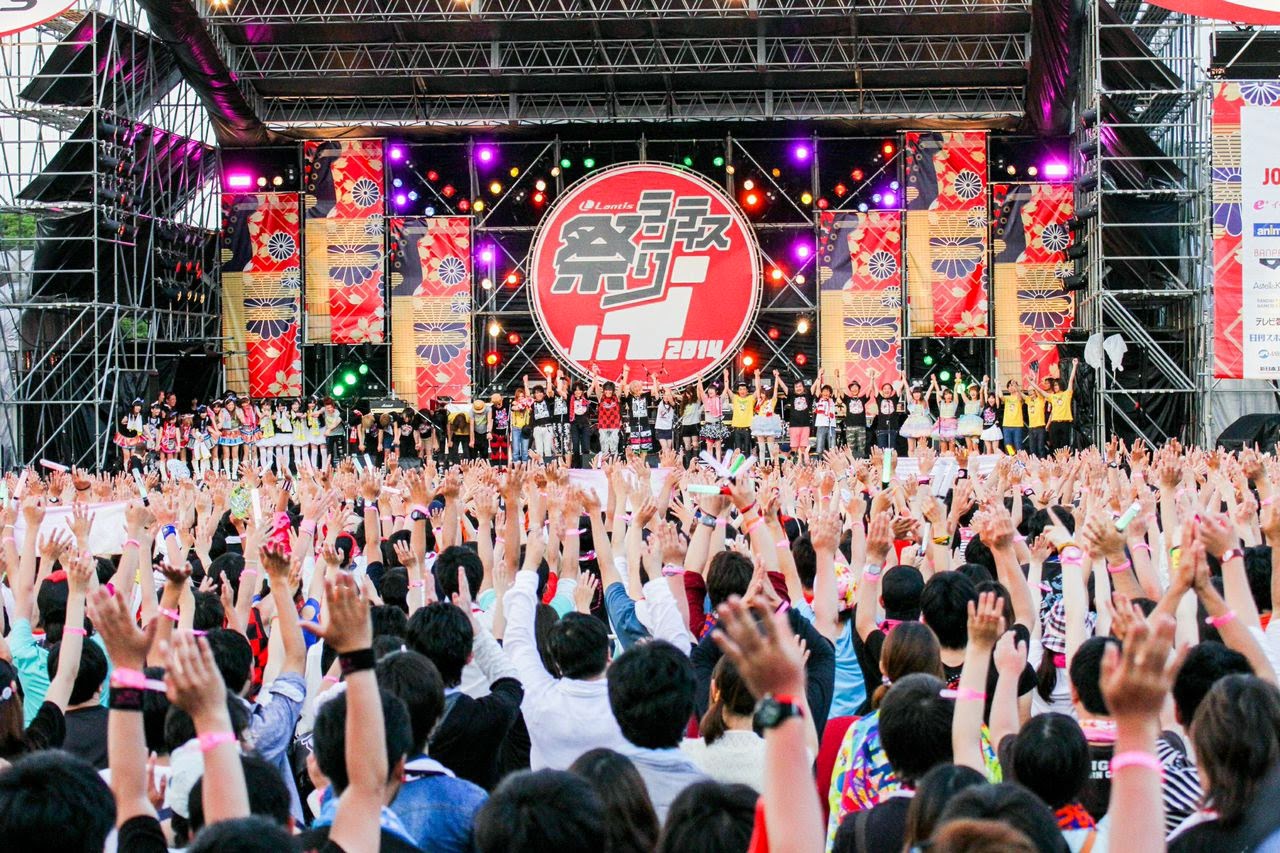
Anisongs! Anime & J-Pop cross the language barrier in Las Vegas, for The Japan Times

Image
Lantis looks to woo a dedicated fan base with anisong tour By  Roland Kelts As soon as the music starts, the language barrier at overseas expos of Japanese pop culture is breached. Legions of non-Japanese fans, most of whose knowledge of the language is limited to basic greetings and exclamations, burst into karaoke-style singalongs, mimicking dance moves and waving glow sticks. Their instant fluency lasts for about three to five minutes. Then the song ends and they retreat to their native tongues. The Japanese music industry hasn’t had an international chart-topper since Kyu Sakamoto’s “Sukiyaki” (Ue o Muite Arukou) — released in the United States and the United Kingdom in 1963. And while contemporaries Kyary Pamyu Pamyu and virtual idol Hatsune Miku generate millions of YouTube hits, they are lightweights next to South Korean Psy and his one-off wonder, “Gangnam Style,” which is now famous for overloading the file-sharing site’s view counter last month. The language ba...

Coming of Age in today's Japan, for Utne Reader

Image
The Satori Generation A new breed of young people have outdone the tricksters of advertising. By   Roland Kelts [Photo by Flickr/Kathleen Zarubin] Young Americans and Europeans are increasingly living at home, saving money, and living prudently. Technology, as it did in Japan, abets their shrinking circles. If you have internet access, you can accomplish a lot in a little room. And revolution in the 21st century, as most young people know, is not about consumption—it’s about sustainability. They don’t want cars or brand name handbags or luxury boots. To many of them, travel beyond the known and local is expensive and potentially dangerous. They work part-time jobs—because that is what they’ve been offered—and live at home long after they graduate. They’re not getting married or having kids. They’re not even sure if they want to be in romantic relationships. Why? Too much hassle. Oh, and too expensive. In Japan, they’ve come to be known as satori sedai—the “enlightened ...

On Haruki Murakami's "The Strange Library," illustrated by Chip Kidd, for The New Yorker

Image
Illustrating Murakami By  ROLAND KELTS Haruki Murakami’s illustrated novella, “The Strange Library,” arrived in the mail last month looking like a Christmas card from a bipolar ex. Two cheery and colorful cartoon eyes adorn the card’s top half; beastly fangs in sepia tone snap down below. When I slid open the envelope-like front cover, its button seal bearing the numerals “107,” I expected to find menace, and I did. One dark-rimmed emerald green eye glared at me from the broad interior fold, embedded in hair and encircling a black pupil. On the smaller bottom flap was the upside-down half-moon mouth of a smiling child, skin pink and over-bright, canines pristine. Two realities trading places, the threat of violence in an uneasy state of play: classic Murakami, of course. But also vintage Chip Kidd, the associate art director at Knopf who has been designing U.S. first editions of Murakami books since the author’s 1993 short-story collection, “The Elephant Vanishes.” Kidd’...

Sanrio's kawaii 3D anime J-Pop "Nutcracker", for The Japan Times

Image
Sanrio’s ‘Nutcracker’ offers visual experience in 3-D By Roland Kelts For anyone raised in the West, the year-end holidays in Japan can be a jarring experience, at least for the uninitiated. Decorated trees, illuminated boulevards and carols in convenience stores coincide with Colonel Sanders statuettes remade into Santa Claus and mini-skirted chorus girls in reindeer costumes on TV. If you live in Japan for more than a few years, however, you might come to embrace this topsy-turvy, roller-coaster version of the holiday season. Just close your eyes and enjoy the ride. This year, that ride took on a psychedelic technicolor glow in cinemas nationwide, courtesy of Sanrio’s “The Nutcracker” (“Kurumiwari Ningyo”), which was released on Nov. 29. The stop-motion animated film, loosely based on ETA Hoffman’s original story and the Tchaikovsky ballet, is credited to Sanrio founder Tsuji Shintaro, with additional writings and song lyrics by the late avant-garde author, poet, dramatist a...


Disney's Japanamerica, for The New Yorker

Image
Japan and America Meet in “Big Hero 6” By Roland Kelts I first heard about Disney’s “Big Hero 6” and its unprecedented hybrid setting—an urban mashup of San Francisco and Tokyo called San Fransokyo—at this summer’s Anime Expo, North America’s largest annual convention devoted entirely to Japanese pop culture. Amid the throngs of cosplay (costume play), anime, and manga revellers and garishly lit promotional booths, the news of “Big Hero 6,” delivered by a bright-eyed and green-wigged young companion, didn’t sound promising. I pictured a crudely expanded version of San Francisco’s existing Chinatown, with maybe a few additional sushi counters and one or two Pikachu or Totoro dolls cluttering the background. Instead, the movie’s metropolitan portmanteau is a marvel of architectural alchemy. Shibuya skyscrapers with pulsing video screens hug San Francisco’s iconic Transamerica Pyramid. Victorian Mission duplexes line hilly San Fransokyo neighborhoods, aglow from the pink-white li...