Posts

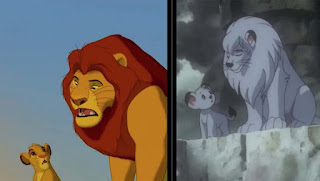
How Disney ripped off Tezuka: The Lion King vs Kimba The White Lion
Image
Big Little Lions: Disney's New 'Lion King' Dodges the 'Kimba' Similarity Issue The Hollywood Reporter Over the years, however, many anime fans have speculated that there were, perhaps, other reasons that Tezuka Productions declined to take legal action against Disney, with some even suggesting that the company might have paid them off in secret.  However, in the 2006 book Japanamerica: How Japanese Pop Culture Has Invaded the U.S. by Roland Kelts, Tezuka Productions' Yoshihiro Shimizu insists they never received any compensation.   "Of course, we were urged to sue Disney by some in our industry. But we're a small, weak company. It wouldn't be worth it anyway. … Disney's lawyers are among the top 20 in the world." Read >>

Anime's aging artists keep going: Mamoru Oshii (Ghost in the Shell) has a new series

Image
Anime's aging but active artists: Mamoru Oshii on his latest project, 'Vladlove' The Japan Times Writer and director Mamoru Oshii is best known for creating sci-fi thrillers that challenge orthodoxy with their philosophical musings and provocative, often nutty, imagery. His most famous film, the 1995 anime epic “Ghost in the Shell,” features a stone-cold cyborg heroine who dives nude off a skyscraper and is memorably dismembered by a tank. But at a Tokyo press conference last week to introduce his latest project, a 12-episode slapstick comedy series titled “Vladlove,” all Oshii wanted to talk about was girls. Real ones. And a vampire named Mai. “This time I wanted to take on a girl-meets-girl story,” he said. “The main characters are five schoolgirls. There won’t be any hot guys.” Oshii is the series’ creator and chief director, working with fellow anime veteran Junji Nishimura (“Ranma ½”). Financed by Ichigo Animation, a newly formed subsidiary of a rea...

Why Hollywood doesn't get Anime

Image
Why Hollywood doesn't yet get anime The Japan Times No fewer than three big-budget Hollywood films based on Japanese originals opened this year: “Alita: Battle Angel,” “Pokemon Detective Pikachu” and “Godzilla: King of the Monsters.” While all three were still being promoted, “Gundam” and “Akira” were green-lit for production by Legendary Entertainment and Warner Bros., respectively. An adaptation of Sega’s Sonic the Hedgehog video game will be out in November, followed by Hollywood takes on Capcom’s Monster Hunter next year and Nintendo’s Super Mario in 2022. The highest grossing anime feature ever, Makoto Shinkai’s 2016 “Your Name.,” is being remade as a live-action film, produced by “Star Wars” reboot king, J.J. Abrams. Hollywood renderings of “Attack on Titan” and the iconic mascot Hello Kitty are also reportedly on the way. But so far, Hollywood’s versions of Japanese content have received mixed reviews at best, with some earning respectable but not remarkable...

My take on Broadway's PIPPIN produced in JAPAN

Image
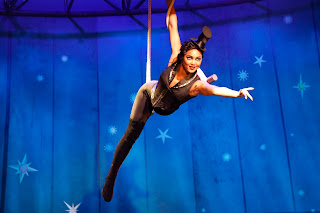
PIPPIN in Tokyo Tokyo Weekender True to its 2013 source, the Japanese production of the Tony-winning Broadway musical revival of “Pippin” turns the physicality up to 11. Most of the choreography is acrobatic, with actors contorting themselves into seemingly impossible positions, and some is aggressively sensual. Yet on a stage teeming with athletic young bodies in skintight costumes, the one that draws the most enthusiastic applause belongs to 73-year-old Mie Nakao. The veteran actress’s star turn as Berthe (a role she rotates with Beverly Maeda), grandmother of the eponymous hero (played with idol-boy earnestness by Japanese-Spanish TV star and singer, Yu Shirota), comes during her solo performance of “No Time At All,” a song preaching pleasure at all costs. After the fourth chorus, Nakao suddenly doffs her dowdy gown and shawl to reveal bared shoulders and legs tucked into a colorful corset. She ascends on a trapeze with the aid of a shirtless hunk, gripping the ro...

Hiroshima and Hayao Miyazaki: America's musician for Studio Ghibli

Image
When Japan strikes the right chord The Japan Times American composer, arranger and violinist Chad Cannon’s first encounter with Japan came via a Nintendo video game called Ninja Gaiden, which he and his fellow childhood gamers in Salt Lake City, Utah, mispronounced as “Ninja Gayden.” Later, an older sister, also a musician, would return from a tour of Japan bearing a gift shop special: a Hokkaido-shaped clock that he hung on his bedroom wall. Now 33, Cannon is an accomplished artist immersed in Japanese culture. He has toured with the renowned violinist Midori Goto, and performed solo concerts in schools and evacuation centers throughout the devastated Tohoku region after the March 11, 2011 disasters. In 2016, he composed the original score for the award-winning Hiroshima documentary, “Paper Lanterns,” whose recording features shakuhachi flute player Kojiro Umezaki and vocalist/lyricist Mai Fujisawa. Fujisawa’s father, veteran composer and conductor Joe Hisaishi, bes...

My interview for NPR on "Detective Pikachu," the first Hollywood live-action Pokemon movie

Image
On Pokemon for NPR

My hero, ULTRAMAN, hits Netflix as anime

Image
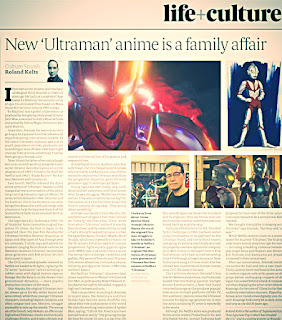
New 'Ultraman' anime is a family affair The Japan Times I first met anime director and mechanical designer Shinji Aramaki in Tokyo 12 years ago. He had just completed “Appleseed: Ex Machina,” the second in a trio of epic CG-animated films based on Masamune Shirow’s four-volume 1985 manga. “Ex Machina” was a global collaboration: co-produced by Hong Kong/Hollywood director John Woo, costumed by Italy’s Miuccia Prada and scored by Yellow Magic Orchestra’s Haruomi Hosono. Since then, Aramaki has become anime’s go-to guy for Japanese franchise reboots and sequels targeting international markets. As the nation’s domestic audience ages and its youth population shrinks, producers are scrambling to dust off older titles that might resonate both at home and abroad. That has them going to Aramaki a lot. Now 58 and the father of two adult daughters, he is currently working alongside screenwriter/director Kenji Kamiyama on anime adaptations of 1989’s “Ghost in the Sh...